
Last updated September 10, 2026
Level 1 sweep and inspection to the NFPA 211 annual standard - flue, crown, cap, and flashing checked and photographed
Chimney sweep logs do not sweep chimneys. They loosen some creosote - which then falls where a brush and vacuum still have to collect it.
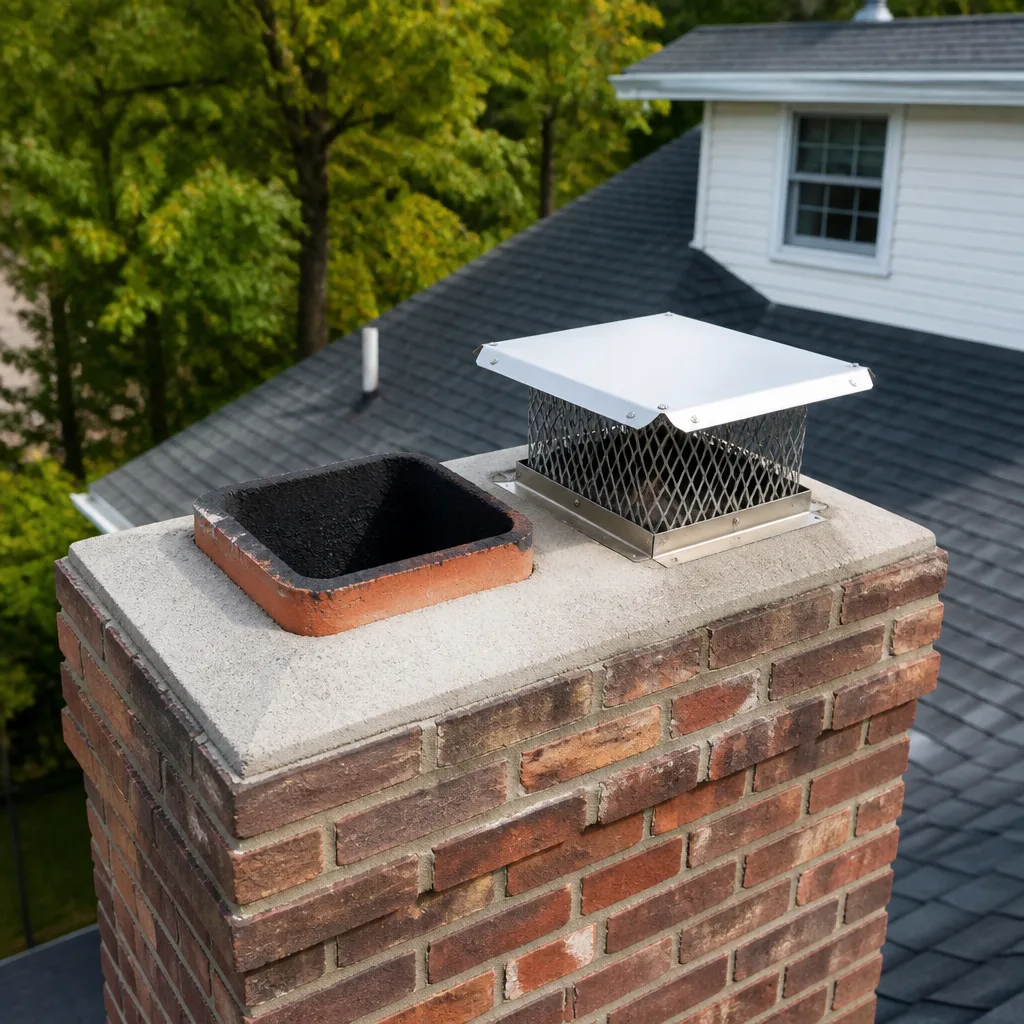
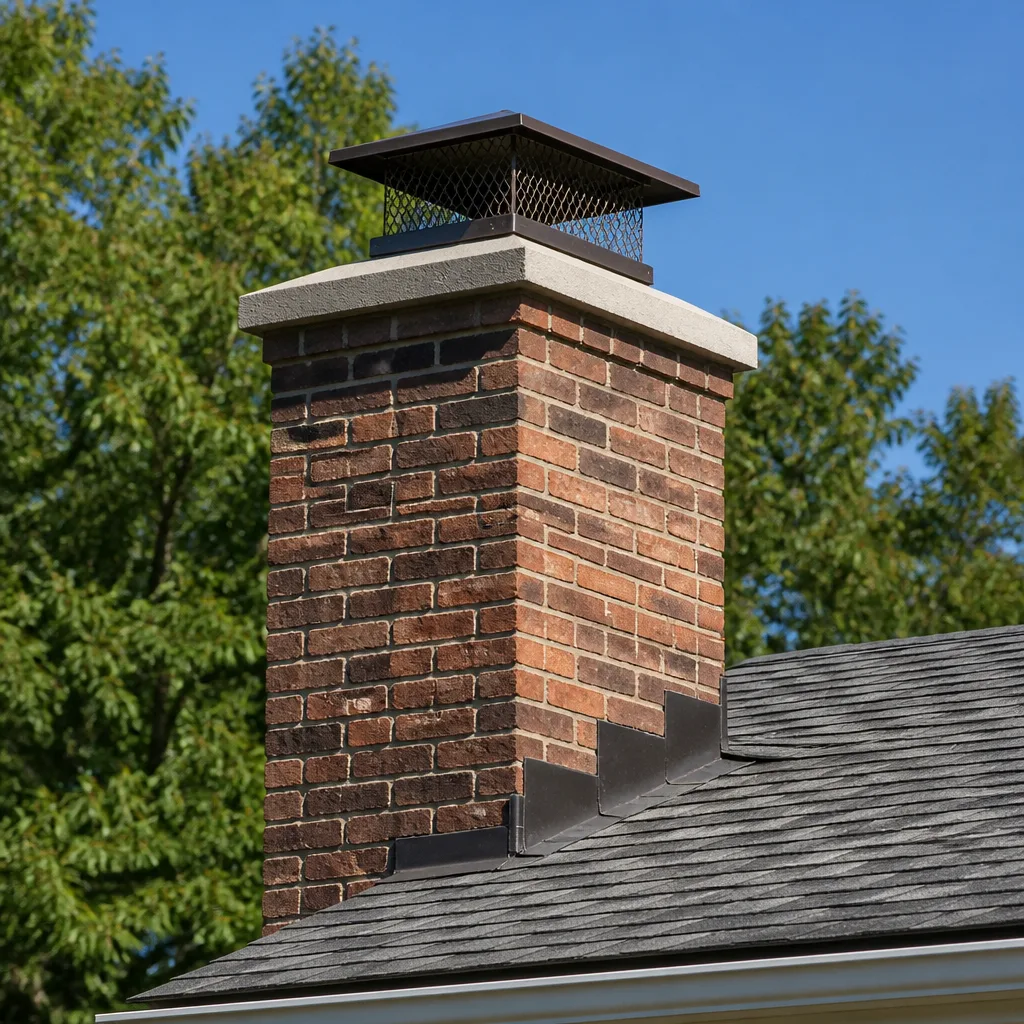
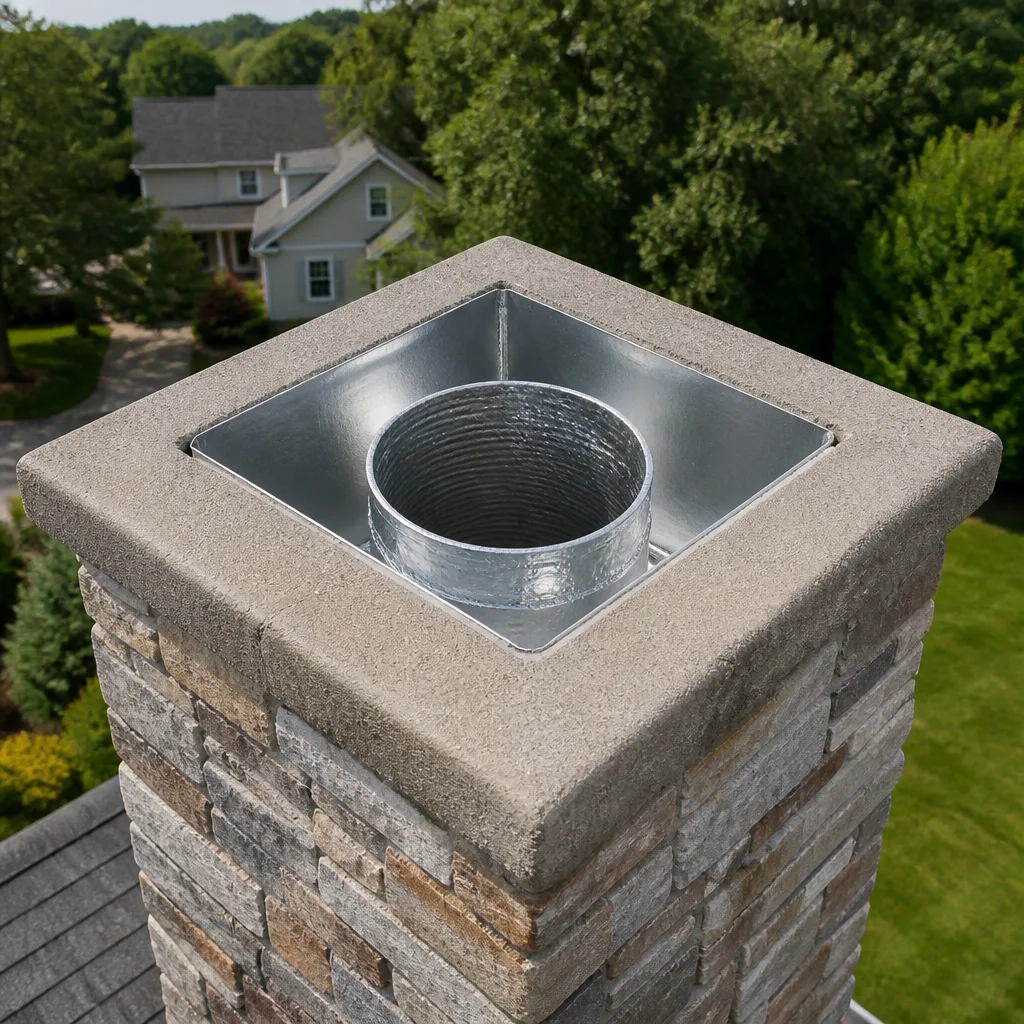
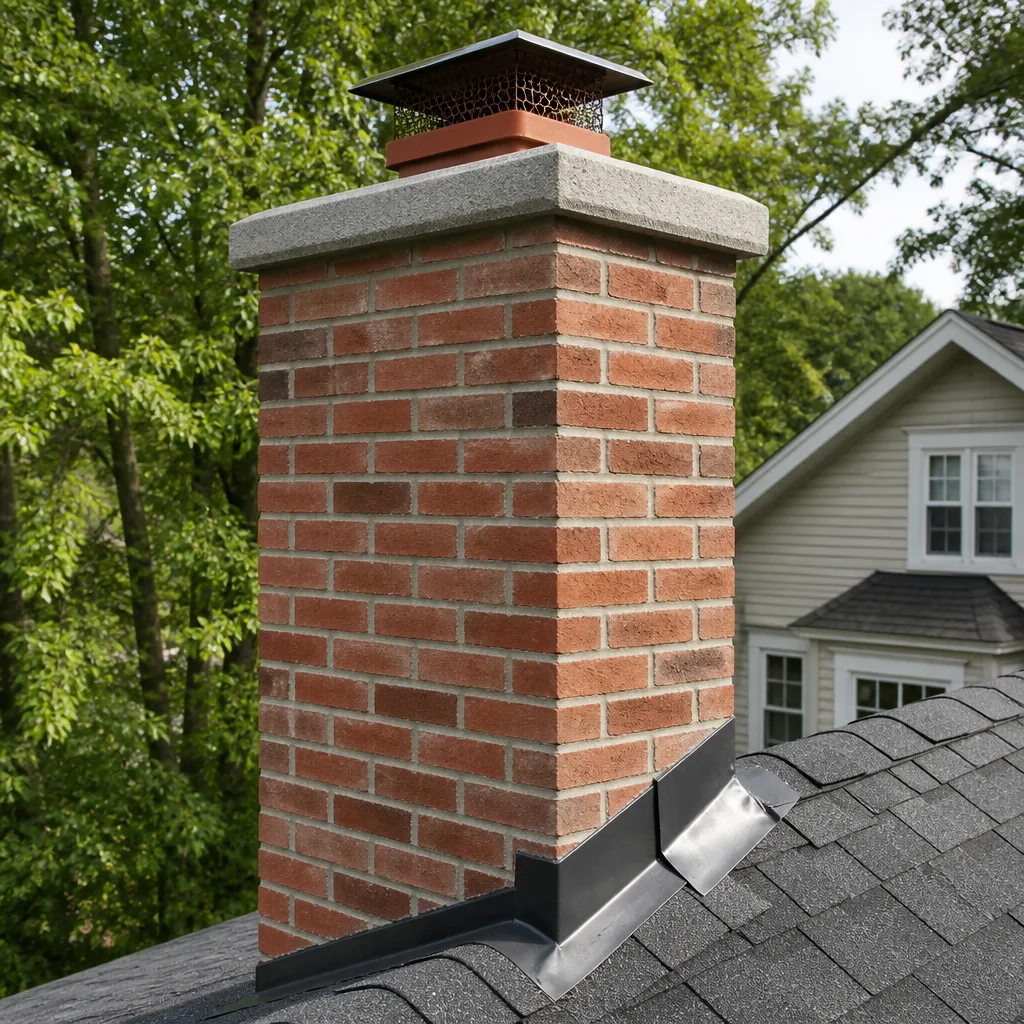
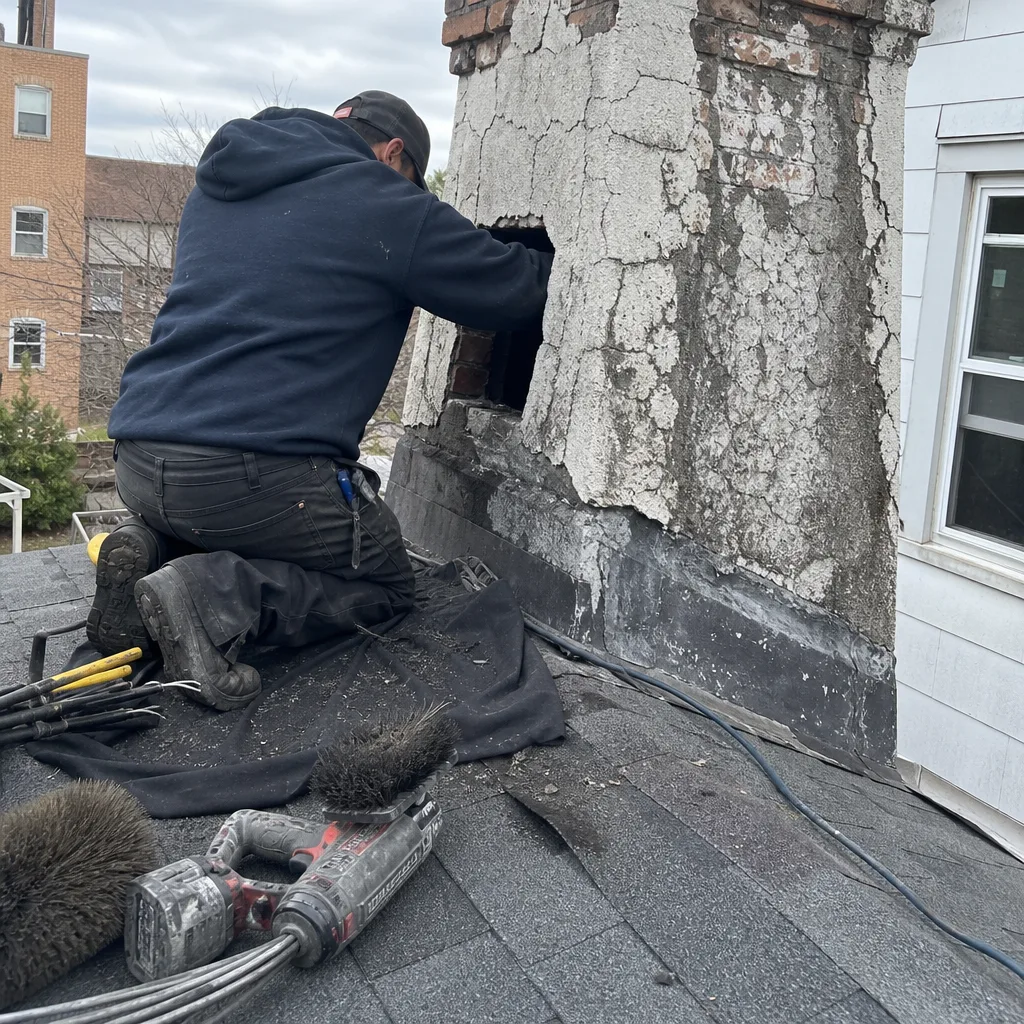 Before
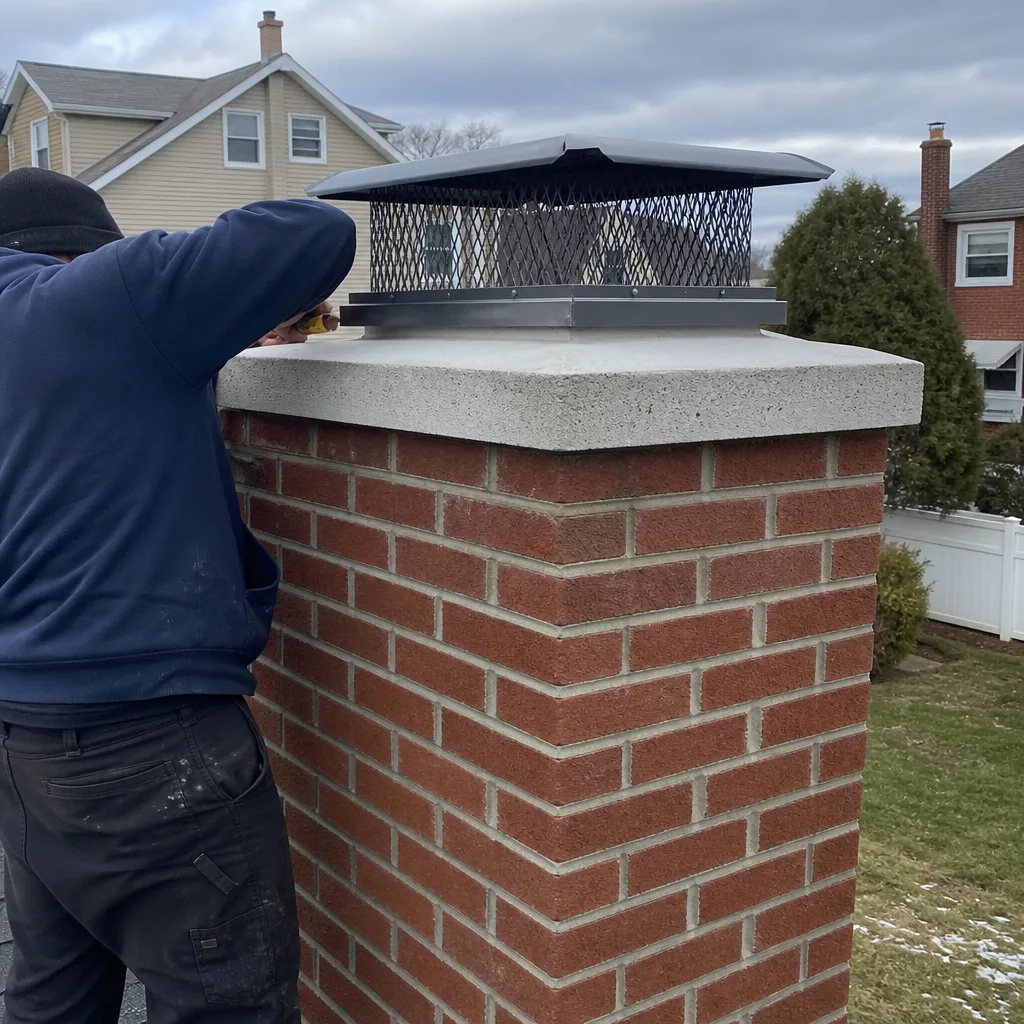 After
After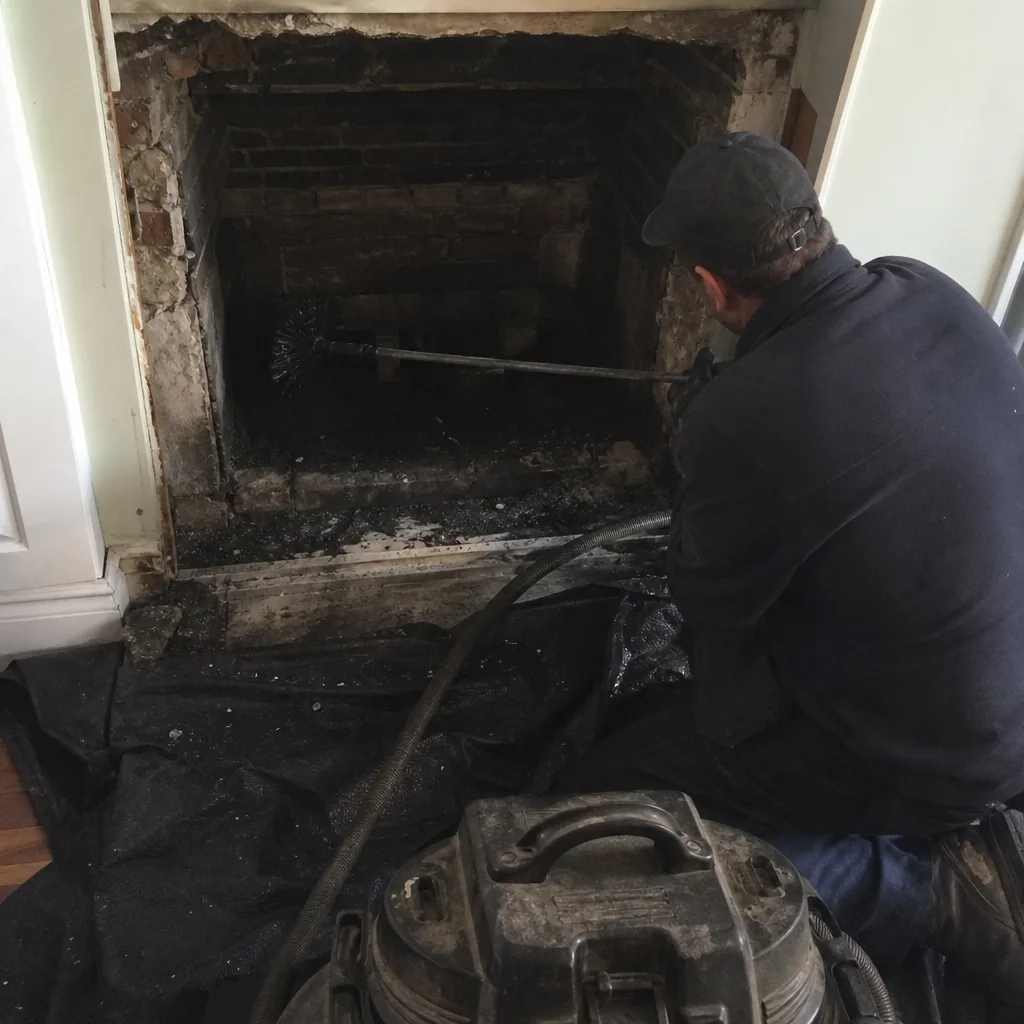 Before
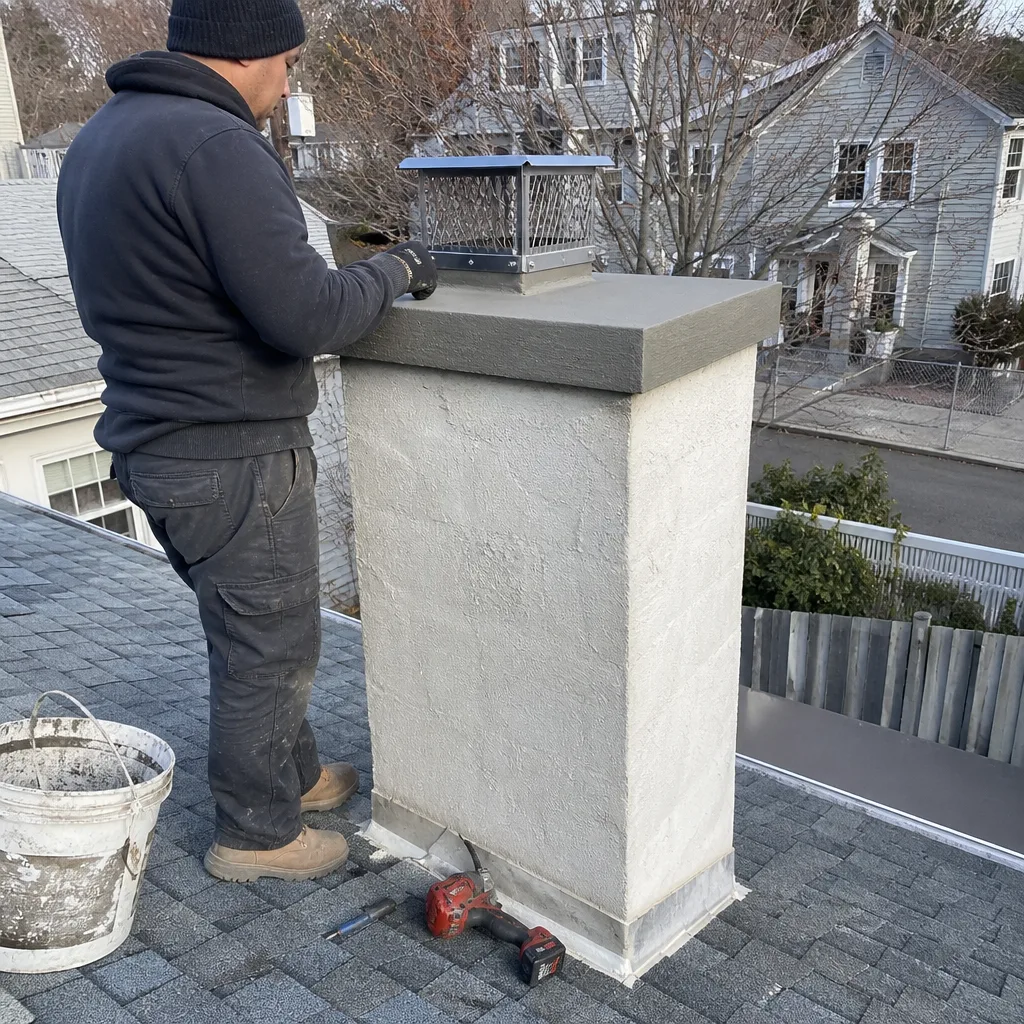 After
After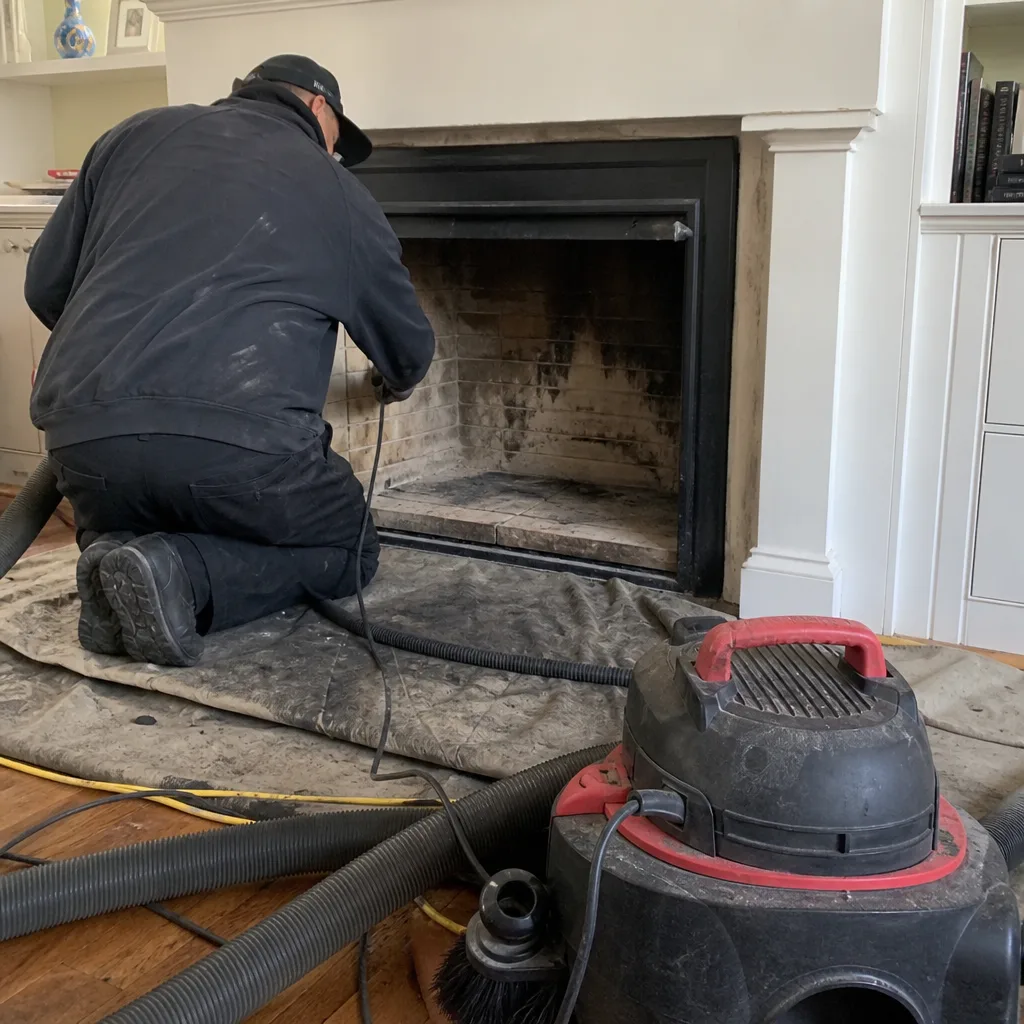 Before
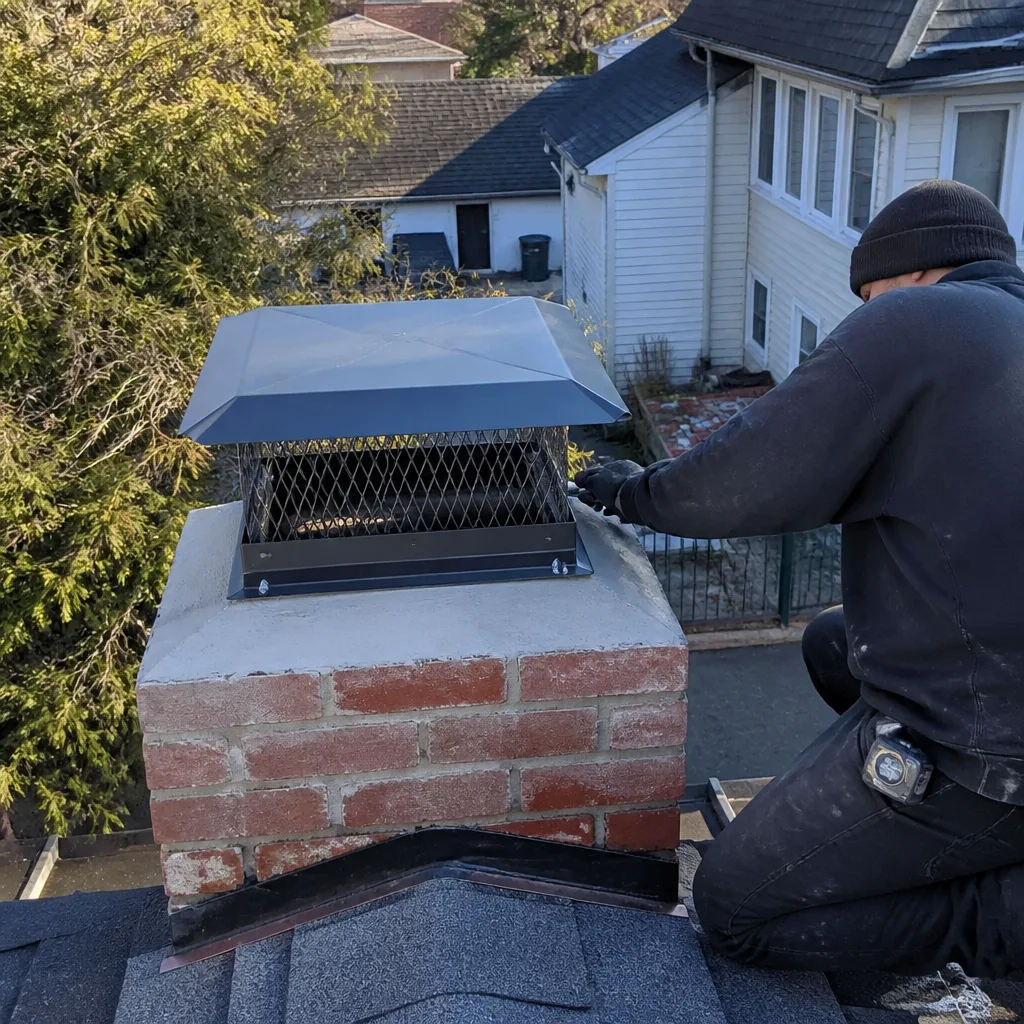 After
AfterDIY vs Professional Chimney Cleaning: The Jersey City Homeowner’s Decision Guide
Most chimney fires don’t start because nobody cleaned the flue. They start because somebody cleaned what they could see and assumed the rest was fine. In Jersey City, where rowhouse chimneys often serve multiple fireplaces across shared walls and pre-1970 clay tile liners are still common, that assumption carries real weight. A chimney brush removes loose soot. It does not reveal a cracked tile behind the creosote, a separated liner joint above the smoke chamber, or water damage from ice intrusion that weakened the structure last winter. This guide shows exactly where DIY cleaning ends and professional evaluation becomes necessary, so you can make the decision with your eyes open.
Quick Answer
A competent homeowner can safely clean a straight, single-flue chimney with proper equipment if there’s no stage-two creosote, no liner damage, and no access complications. For most Jersey City homes, especially rowhouses with offset flues, shared walls, or pre-1970 construction, professional cleaning with a Level-2 camera inspection is the practical choice because it documents hidden conditions that affect both safety and insurance coverage. Our How to Hire a Chimney Cleaning Contractor in Jersey City: A Step-by-Step Guide explains exactly what to look for when choosing a sweep. The $150-$250 savings of DIY carries forward every unknown the brush never touched.
Table of Contents
- What DIY Chimney Cleaning Actually Covers
- Equipment Costs: The Real Math
- When DIY Becomes Dangerous: Hard Stop Conditions
- What Professional Inspections Document That DIY Cannot
- Jersey City-Specific Factors That Shift the Calculation
- Insurance Claims and the Documentation Gap
- DIY vs Professional: Full Cost Comparison
- How to Choose a Professional Chimney Sweep in Jersey City
What DIY Chimney Cleaning Actually Covers
Let’s be plain about what a homeowner can actually accomplish with a brush and some determination. A straight flue, accessible from the top, with standard soot buildup and no structural complications, can be cleaned adequately by a careful DIYer. We’ve seen it done. The process is not complicated in principle.
Here is what proper DIY cleaning requires:
- Correct brush diameter: The brush must match your flue dimensions exactly. A 6-inch round brush in an 8-inch flue polishes the center and leaves the walls dirty. An oversized brush wedges and can damage clay tiles.
- Appropriate rods: Fiberglass or polypropylene rods, enough length to reach the full flue height plus working room. Metal rods conduct electricity and are hazardous near overhead lines.
- Drop cloths and protection: Soot is fine particulate. Without sealed containment, you’ll find it in your HVAC system for months.
- Proper PPE: N95 minimum, eye protection, gloves. Creosote is a skin irritant and respiratory hazard in concentration.
- Debris removal: Ash and creosote fall to the smoke shelf and firebox. It must be completely removed, not just pushed around.
The brush removes loose, powdery soot (stage-one creosote) from accessible surfaces. That’s the full scope. It does not remove glazed creosote (stage two), which requires rotary tools and chemical treatment. It does not inspect the flue walls. It does not evaluate the crown, cap, flashing, or liner condition. It cleans what it touches, and it touches only what the rods can reach in a straight line.
In Jersey City’s Bergen-Lafayette or The Heights, where many homeowners take genuine pride in maintaining their properties themselves, we respect the impulse. We’ve been in those basements and on those roofs. The question is not whether you can run a brush through a flue. The question is whether running that brush tells you what you need to know before you light the next fire.
Equipment Costs: The Real Math
The hardware store sells a basic chimney brush kit for $40-$80. Professional-grade equipment runs higher. Let’s look at actual costs for equipment that matches what a trained sweep carries.
| Item | Basic DIY | Professional-Grade DIY |
|---|---|---|
| Brush + rods (single flue size) | $50-$80 | $120-$180 |
| Shop vacuum (HEPA, ash-rated) | $80-$150 | $200-$350 |
| Drop cloths, PPE, containment | $30-$50 | $60-$100 |
| Inspection mirror and light | $15-$30 | $80-$150 |
| Total first-year investment | $175-$310 | $460-$780 |
Amortization matters. If you clean once annually and the equipment lasts ten years, basic DIY runs $17.50-$31 per cleaning. Professional-grade DIY runs $46-$78 per cleaning. A professional chimney cleaning in Jersey City typically ranges $200-$350 for a standard sweep with basic inspection, or $300-$500 with Level-2 camera documentation. See our Chimney Cleaning Cost Breakdown: The Jersey City Homeowner’s Reference for 2026 for a detailed analysis of what drives these prices.
The gap narrows with professional-grade equipment, but here’s what the math doesn’t capture: equipment sitting in a garage between annual uses degrades. Brushes flatten. Rods warp. Vacuum filters clog and get replaced late or not at all. We’ve arrived at homes where the homeowner’s “professional” brush was three years old and had lost half its bristles. The real per-cleaning cost is often higher than the amortization suggests.
More importantly, the equipment comparison assumes the flue is straight, accessible, and problem-free. In Jersey City rowhouses, that assumption fails often enough that we treat it as the exception, not the rule.
When DIY Becomes Dangerous: Hard Stop Conditions
There are conditions where DIY cleaning is not merely incomplete but actively hazardous. We have encountered each of these in Jersey City homes, and we flag them plainly.
Offset Flues
An offset flue changes direction, usually with a 30- or 45-degree bend to navigate around structural elements. Standard rods cannot navigate offsets. Forcing them creates a stuck-rod situation that requires dismantling the flue or cutting into walls. In Jersey City’s older rowhouses, particularly in Downtown and Paulus Hook, offsets are common where chimneys were retrofitted for central heating or kitchen appliances. If your flue has an offset, DIY cleaning is not an option.
Stage-Two or Stage-Three Creosote
Stage-one creosote is fluffy, black, and brushes away easily. Stage-two is shiny, hard, and tar-like, requiring rotary chains or chemical treatment. Stage-three is glazed, rock-hard, and often requires removal with specialized equipment that generates significant heat. Attempting to brush stage-two or stage-three creosote with hand tools is ineffective and can dislodge chunks that block the flue. The resulting restriction can force carbon monoxide back into living spaces. We’ve seen this in Jersey City homes where homeowners assumed “a good scrubbing” would handle buildup from decades of wood burning.
Clay Tile Liner Systems in Pre-1970 Construction
Clay tile liners crack from thermal shock, settlement, or freeze-thaw cycles. A cracked tile exposes the surrounding masonry to direct flue temperatures and creosote penetration. The crack itself may be invisible from the firebox or roof. Running a brush through a cracked tile can wedge debris into the crack, worsening blockage, or snag and break the tile further. In Jersey City’s housing stock, much of which predates 1970, clay tile liners are standard and their condition is unknown without camera inspection.
Post-Storm or Suspected Structural Damage
After severe weather, including the ice storms that hit Hudson County in recent winters, chimney caps can shift, crowns can crack, and flue liners can sustain damage from water infiltration and freeze expansion. Cleaning a damaged flue without inspecting for damage first can mask the problem and delay necessary repair. We documented significant cap and crown damage in Jersey City after the January 2024 ice event, particularly on exposed rooftops in The Heights and Journal Square.
Shared or Multi-Flue Chimneys
Many Jersey City rowhouses have multiple flues in a single chimney structure, sometimes serving different units or different appliances. Cleaning one flue without understanding the separation between flues, or without verifying that separation is intact, risks cross-contamination and can violate fire code. This is not a theoretical concern; we’ve found separated flues in multi-family conversions where DIY cleaning had been performed on one unit without awareness of the shared structure.
Steep Roof Access
Jersey City rowhouse roofs are often steep, with limited tie-off points and adjacent structures that complicate ladder placement. Falls from roof height are a leading cause of serious injury in home maintenance. If safe roof access requires equipment or technique you do not regularly employ, the cleaning task includes a risk profile that exceeds the savings.
What Professional Inspections Document That DIY Cannot
The gap between DIY cleaning and professional service is not primarily the brushing. It’s the documentation of what the brush revealed, and what it could not reach.
A Level-2 inspection, which we perform with every chimney cleaning and sweep in Jersey City, includes:
- Internal video scan of the full flue length using a camera system designed for chimney inspection
- Documentation of creosote thickness, type, and distribution
- Condition assessment of clay tiles, mortar joints, and any existing liner system
- Evaluation of the smoke chamber, firebox, and damper operation
- Exterior assessment of crown, cap, flashing, and visible masonry
- Photos provided to the homeowner with a plain-English verdict on each finding
This documentation serves purposes beyond immediate repair decisions. It establishes baseline condition for future comparison. It supports insurance claims if damage occurs. It satisfies requirements for real estate transactions, which in Jersey City’s active market is a relevant consideration for homeowners who may eventually sell.
The camera reveals what no brush can. In a recent inspection on Mercer Street, we found a separated liner joint twelve feet above the smoke chamber, invisible from either access point. The flue appeared clean. It was also actively leaking combustion gases into the wall cavity. A DIY cleaning would have left that condition unaddressed and potentially worsened by dislodging debris into the gap.
Our technicians use professional-grade materials from DuraFlex, HeatShield, and Olympia Chimney when repair or relining is indicated. These are not substitutions we make to save cost; they are specifications we follow because they perform under conditions that builder-grade materials do not survive.
Jersey City-Specific Factors That Shift the Calculation
Geography and building stock matter. Jersey City’s characteristics push many chimneys toward professional service for reasons beyond the flue itself. Our Seasonal Chimney Cleaning Care for Jersey City: Year-Round Homeowner’s Guide covers how local conditions affect maintenance timing.
Rowhouse density and shared walls. Attached construction means chimney problems in one unit can affect neighbors. A cracked flue or missing cap on a shared chimney creates liability that extends beyond your own firebox. Professional inspection documents condition for all parties and identifies shared-structure issues that individual homeowners might not recognize.
Aging housing stock. Significant portions of Jersey City’s residential construction predate modern chimney codes. Pre-1970 chimneys often lack liners entirely, or have unlined brick flues that were never designed for modern appliance temperatures. Cleaning an unlined flue without evaluating liner necessity is maintenance theater; it looks like care without providing protection.
Rooftop access constraints. Flat roofs, parapets, steep pitches, and limited setback from adjacent buildings make safe roof work a specialized skill in Jersey City. We’ve developed techniques for access that respect both safety and property, including protection of roofing materials and coordination with building management where required.
Local climate patterns. Hudson County’s freeze-thaw cycles, combined with coastal humidity and salt air, accelerate masonry deterioration. Crown and cap damage that might develop slowly inland progresses faster here. Annual professional inspection catches this deterioration before water infiltration compromises the flue structure.
Permit and code awareness. Jersey City requires permits for chimney repair and liner installation. Professional sweeps maintain current knowledge of these requirements and ensure work is documented for code compliance. DIY repair without permit awareness can complicate future sale or insurance claims.
Insurance Claims and the Documentation Gap
Homeowners insurance covers sudden, accidental damage. It does not cover damage from maintenance neglect. The distinction matters when a chimney fire occurs.
If you clean your own chimney and a fire subsequently damages the structure, your insurer will request maintenance records. A receipt for a brush purchase proves you owned equipment. It does not prove the flue was clean, structurally sound, or inspected by a qualified party. Insurers increasingly require professional inspection documentation for chimney-related claims, particularly in jurisdictions with active fire prevention programs like Jersey City.
Conversely, if a professional inspection documented a clean, sound flue and a fire still occurs from an unforeseeable cause, that documentation supports your claim. The inspection creates a contemporaneous record of due diligence.
We’ve worked with Jersey City homeowners navigating post-fire insurance claims. Those with professional inspection records move through the process faster and with better outcomes. Those without documentation face extended investigation and sometimes reduced settlements. The $250 saved on DIY cleaning can cost thousands in claim friction.
DIY vs Professional: Full Cost Comparison
| Factor | DIY Cleaning | Professional Cleaning (Hearthstone) |
|---|---|---|
| First-year out-of-pocket | $175-$780 | $200-$500 |
| Ongoing annual cost (amortized) | $18-$78 | $200-$500 |
| Flue condition documentation | None | Photo/video record provided |
| Hidden damage detection | None | Level-2 camera inspection included |
| Insurance claim support | Purchase receipt only | Professional inspection report |
| Repair warranty | None | 90-Day Done Right Promise in writing |
| Liability if damage occurs | Homeowner bears full risk | Licensed, insured, bonded service |
| Code compliance verification | Homeowner responsibility | Included in service |
The professional column includes our Hearthstone Chimney Co. home service standards: no-hassle upfront pricing, background-checked uniformed technicians, and most jobs completed in a single visit. The 90-Day Done Right Promise means if it’s not right, we come back. In writing. No arguing.
How to Choose a Professional Chimney Sweep in Jersey City
If you decide professional service is the right choice, the next decision is who to hire. Not every sweep operates to the same standard.
Verify credentials. New Jersey requires chimney sweeps to hold appropriate business licenses and liability insurance. Ask for proof. A legitimate professional provides it without hesitation.
Confirm inspection scope. A “cleaning” without internal camera inspection is incomplete. The NFPA 211 standard defines three inspection levels; Level-2 is the minimum appropriate for annual maintenance of a used chimney. Ask specifically whether the service includes video documentation of the full flue.
Request sample documentation. Before booking, ask what you’ll receive. A professional sweep can show you a sample inspection report with photos and plain-English findings. If the answer is vague, the service likely is too.
Check material specifications. If repair is recommended, ask what materials will be used. We specify DuraFlex for liner installations, HeatShield for crown and smoke chamber repair, and Olympia Chimney for compatible components. Generic or unspecified materials are a warning sign.
Evaluate communication. Will a live person answer your call, or does the business route through voicemail and callbacks? At Hearthstone, a live person answers 24 hours a day, 7 days a week. We’ve found that homeowners with chimney concerns, particularly after discovering suspected damage, need responsiveness that automated systems don’t provide.
Review guarantee terms. A guarantee in writing, with clear terms and no paperwork burden, indicates a business that plans to stand behind its work. Our 90-Day Done Right Promise is exactly that. A verbal assurance or a guarantee hedged with exclusions suggests otherwise.
Common Mistakes to Avoid
- Assuming a clean-looking firebox means a clean flue. Soot accumulates in the upper flue and smoke chamber, areas invisible from below. We’ve found heavy buildup in flues whose fireboxes appeared recently cleaned.
- Using a shop vacuum without HEPA filtration. Standard shop vacuums expel fine particulate through their exhaust. In Jersey City’s tight rowhouse interiors, this redistributes soot through the entire home. Ash-rated HEPA vacuums are essential.
- Cleaning from the bottom only. Effective brushing requires top-down or bottom-up with proper technique. Bottom-only cleaning pushes debris onto the smoke shelf, where it restricts airflow and creates a secondary fire hazard.
- Ignoring the cap and crown. A missing or damaged cap admits water, animals, and debris that accelerate flue deterioration. In Jersey City’s coastal climate, cap condition is as important as flue cleanliness.
- Delaying inspection after visible damage. Cracked masonry, white efflorescence, or rust stains indicate active water intrusion. Cleaning without addressing the source wastes effort and can mask worsening conditions.
- Assuming gas appliances don’t need inspection. Gas flues develop different problems than wood flues, including corrosion from condensate and blocked vents from animal nesting. Annual inspection applies to all fuel types.
When to Call a Professional
Call a professional when your flue has any offset or bend, when creosote is glazed or heavy, when your home was built before 1970 and lacks documented liner installation, when you’ve had severe weather or suspect structural damage, when your chimney serves multiple appliances or units, or when you simply want the condition documented by a trained eye with a camera.
We perform chimney repair in Jersey City and throughout Hudson County, and we provide fireplace services in Jersey City that include full inspection, cleaning, and documented repair recommendations. Hearthstone Chimney Co. offers free estimates in Jersey City. Call (732) 507-9649 to schedule. A live person will answer, any hour, any day.
Frequently Asked Questions
Professional chimney cleaning in Jersey City typically ranges from $200 to $350 for a standard sweep with basic inspection, and $300 to $500 for service including Level-2 camera inspection with photo documentation. Factors affecting price include flue accessibility, number of flues, creosote condition, and whether repair recommendations require detailed reporting. Call (732) 507-9649 for an exact quote on your specific chimney; estimates are free.
The National Fire Protection Association recommends annual inspection for all chimneys, and cleaning when inspection reveals sufficient buildup. In Jersey City, where many homes burn regularly through heating season and coastal humidity accelerates masonry wear, annual service is the practical standard. Heavy use, softwoods, or marginal draft conditions may require more frequent attention. We inspect and advise based on actual condition, not a calendar alone. For more guides & resources on chimney maintenance, explore our blog.
You can remove loose soot from a straight, accessible flue with basic equipment if the creosote is stage-one (powdery, black) and no structural issues exist. You cannot detect cracked tiles, separated liner joints, or crown damage with this approach. For most Jersey City chimneys, particularly in older rowhouses, the limitations of DIY equipment exceed the savings. The brush cleans what it touches; it does not inspect what it cannot see.
You need a liner if your chimney is unlined, if the existing liner is damaged, or if you’re installing a new appliance with requirements the current flue cannot meet. We document liner condition with camera inspection and specify replacement only when evidence supports it. In Jersey City’s pre-1970 housing stock, unlined or deteriorated clay tile liners are common, but we recommend repair or replacement based on documented findings, not age alone. Nothing is recommended without photo evidence you can see for yourself.
Skipped cleaning allows creosote accumulation, which restricts draft and increases fire risk. Stage-one creosote progresses to stage-two and stage-three, becoming progressively harder and more hazardous to remove. Water intrusion and minor damage progress unchecked. In Jersey City’s climate, freeze-thaw damage to crowns and caps worsens annually without maintenance. The cumulative effect is more expensive repair, higher fire risk, and potential insurance complications if damage occurs. Annual service prevents the progression; it does not merely clean what is already wrong.
Gas flues require annual inspection, though the cleaning needs differ from wood-burning systems. Gas combustion produces water vapor and corrosive condensate that can deteriorate flue walls. Venting systems can become blocked by debris or animal nesting. We inspect gas flues with the same camera documentation as wood flues, evaluating for corrosion, blockage, and proper draft. The inspection scope is identical; the findings differ based on fuel type.
The Bottom Line
DIY chimney cleaning is possible for a narrow set of conditions: straight flue, stage-one creosote, sound structure, safe access, and no complicating factors. For most Jersey City homes, that narrow set does not apply. Rowhouse construction, aging liners, shared walls, and coastal climate conditions mean the brush alone leaves critical questions unanswered. Professional service with camera inspection documents condition, supports insurance protection, and identifies problems before they become emergencies. The decision is not about capability; it’s about whether the savings of DIY is worth carrying every unknown the brush never touched into your next heating season. We’ve been serving Jersey City and Hudson County for over 42 years, and we’ve learned that the homeowners who sleep soundly are the ones who know exactly what condition their chimney is in. Not the ones who hope it’s fine.
Written by Russell Haines, Owner at Hearthstone Chimney Co., serving Jersey City since 2014.