
Last updated September 10, 2026
Level 1 sweep and inspection to the NFPA 211 annual standard - flue, crown, cap, and flashing checked and photographed
Chimney sweep logs do not sweep chimneys. They loosen some creosote - which then falls where a brush and vacuum still have to collect it.
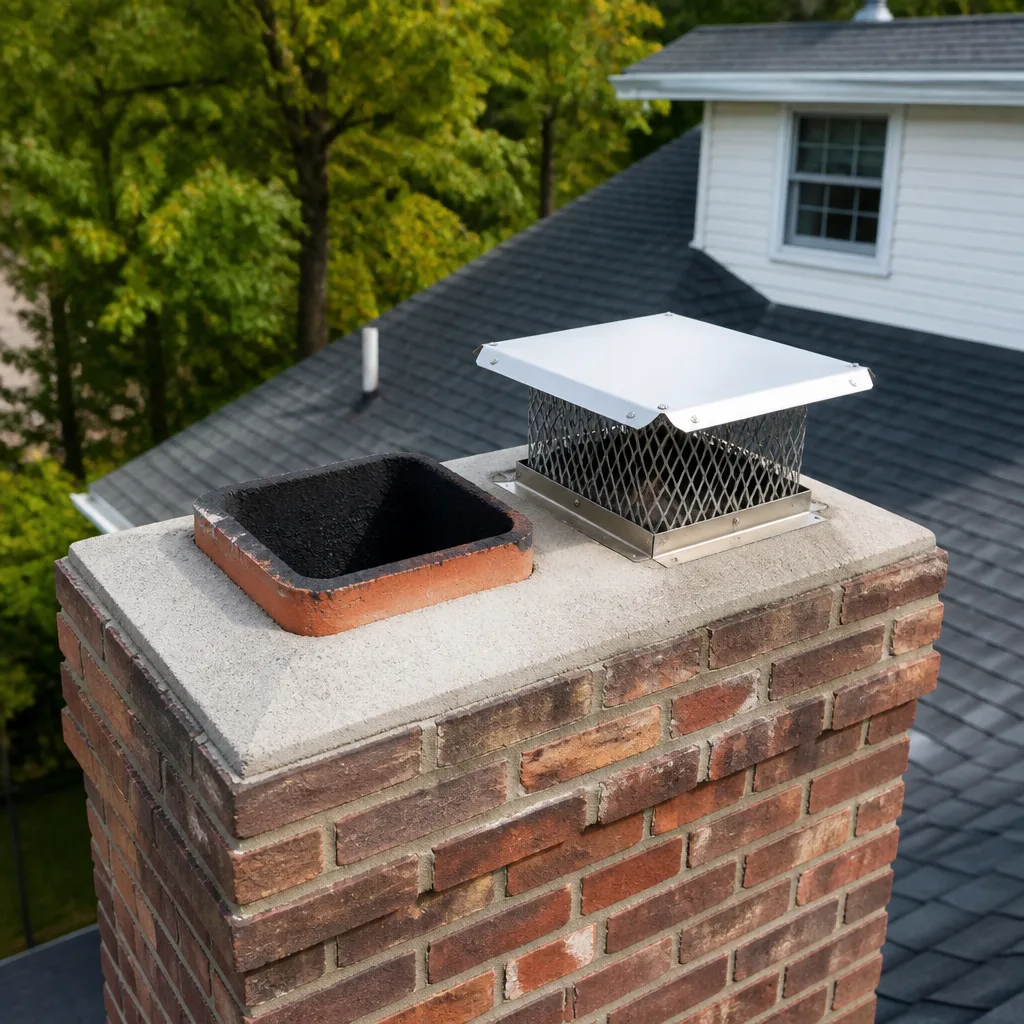
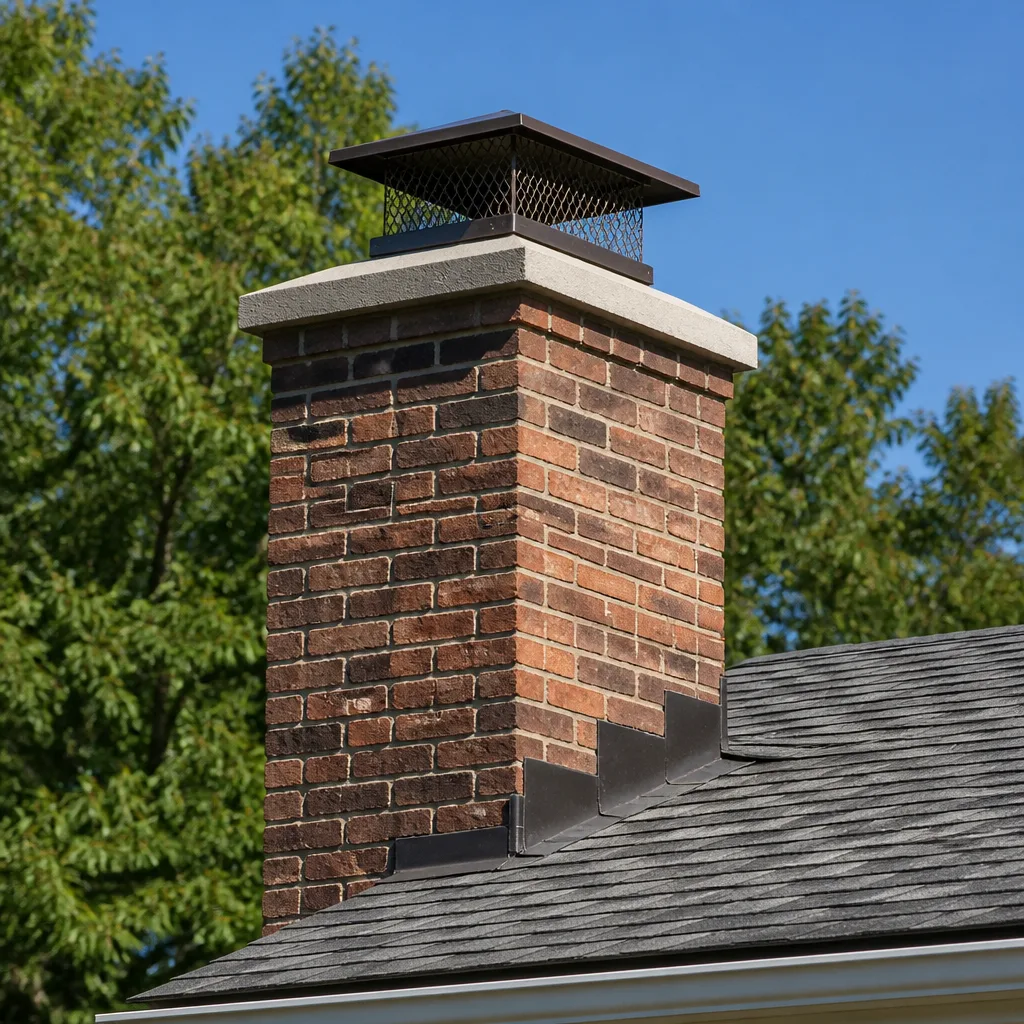
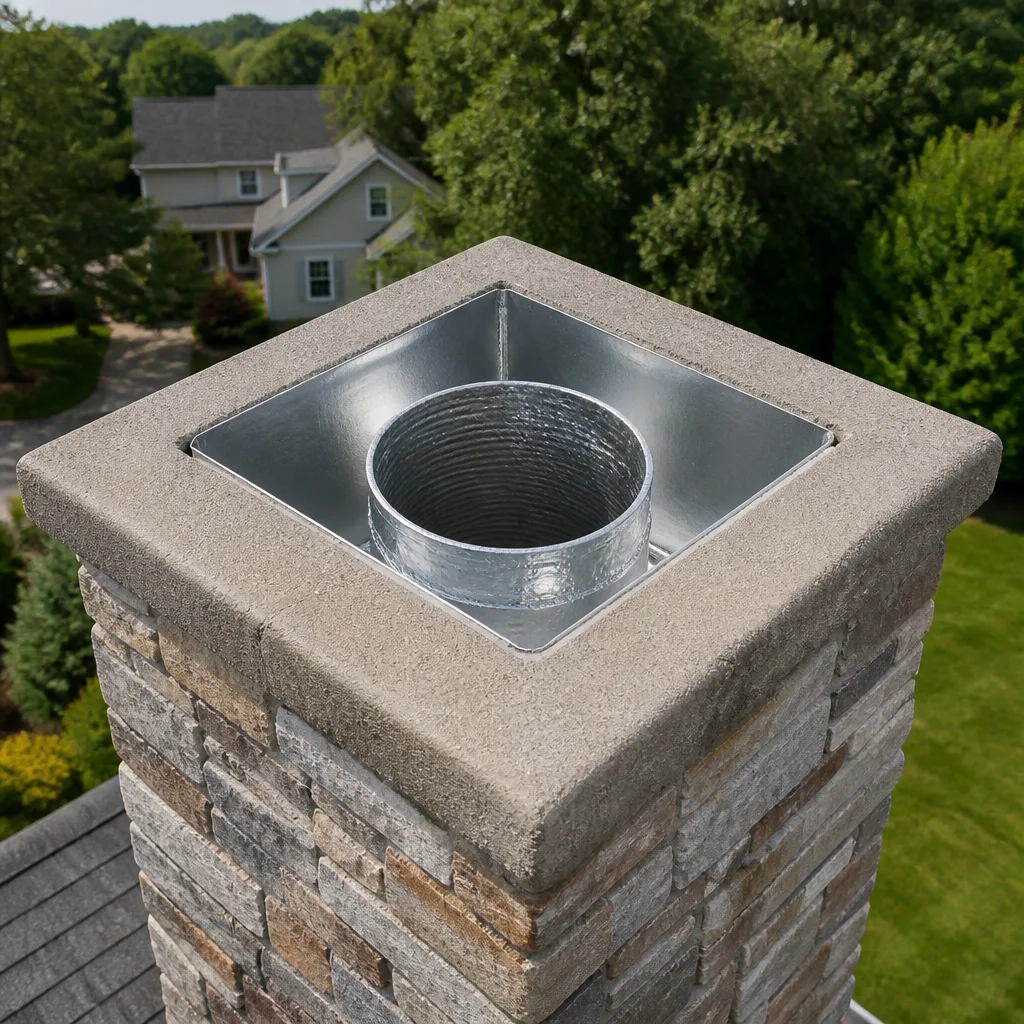
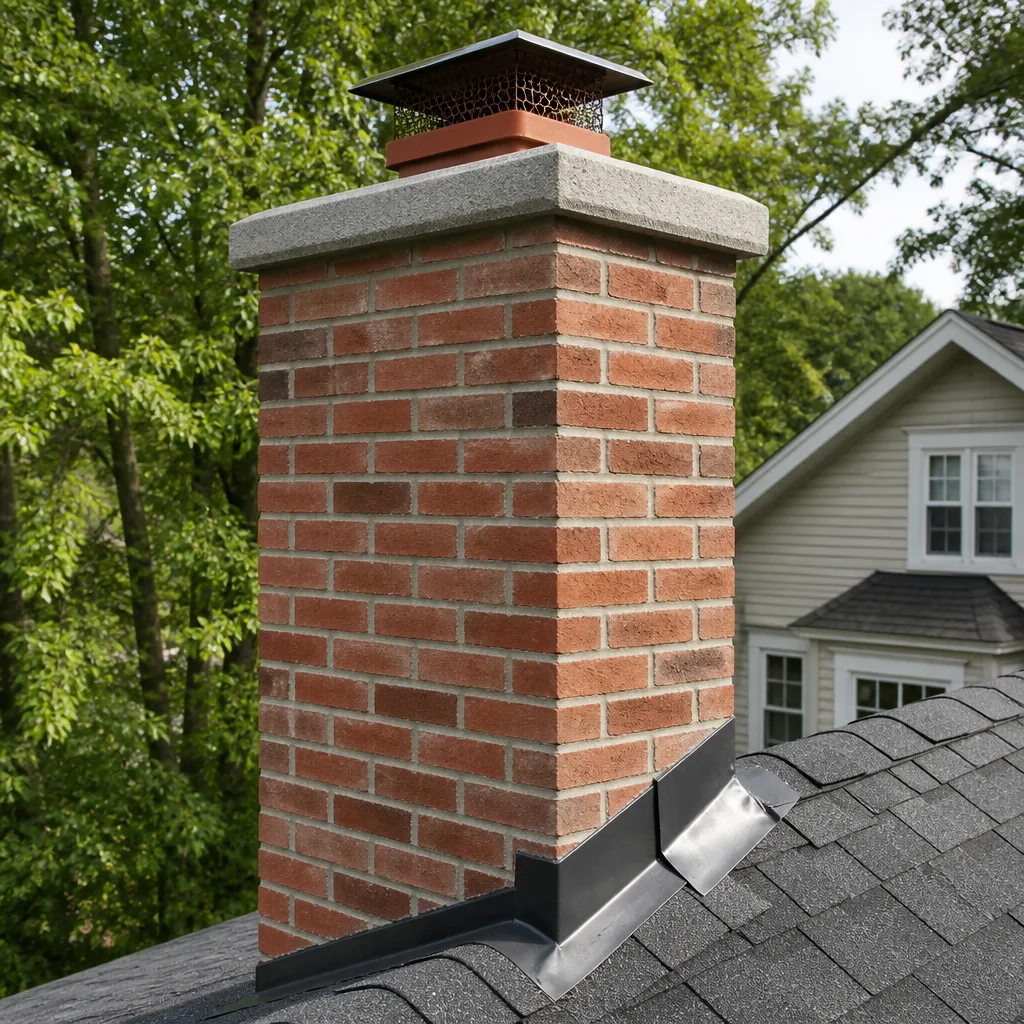
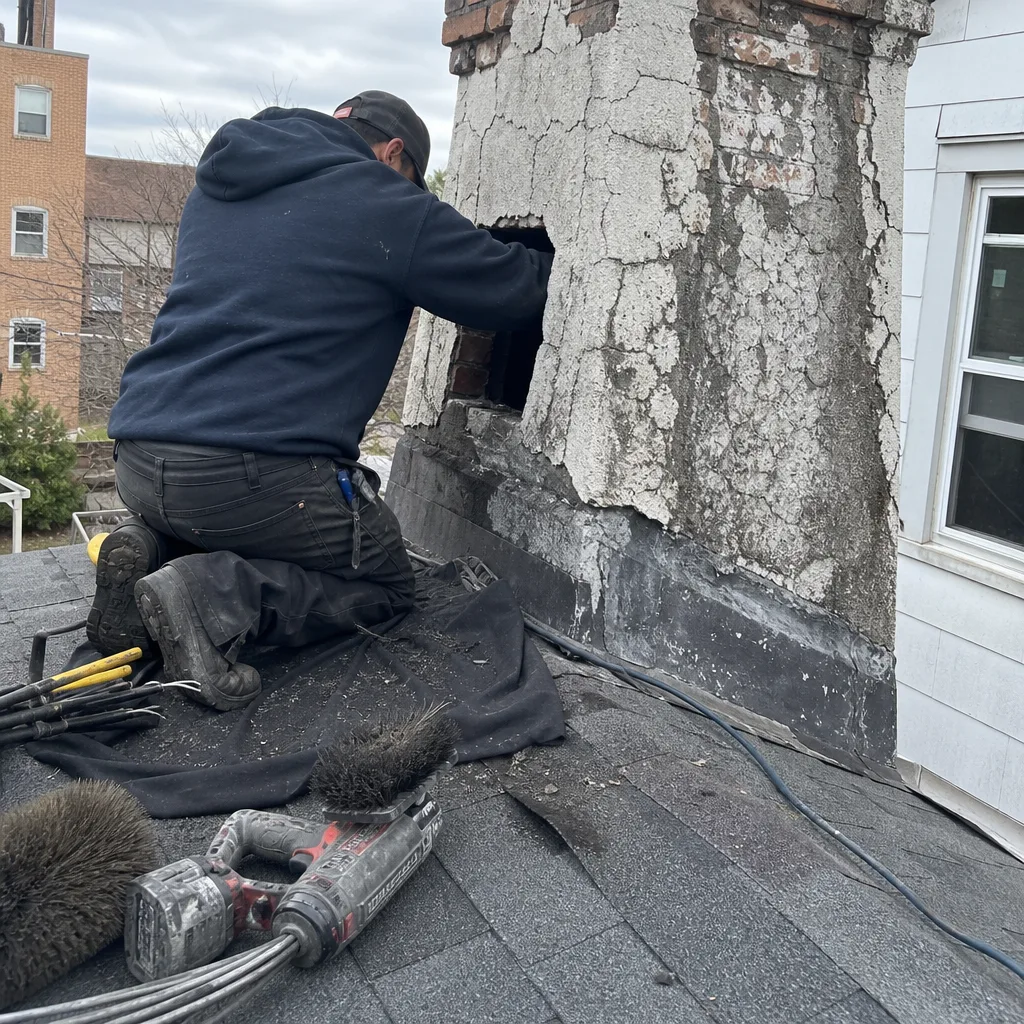 Before
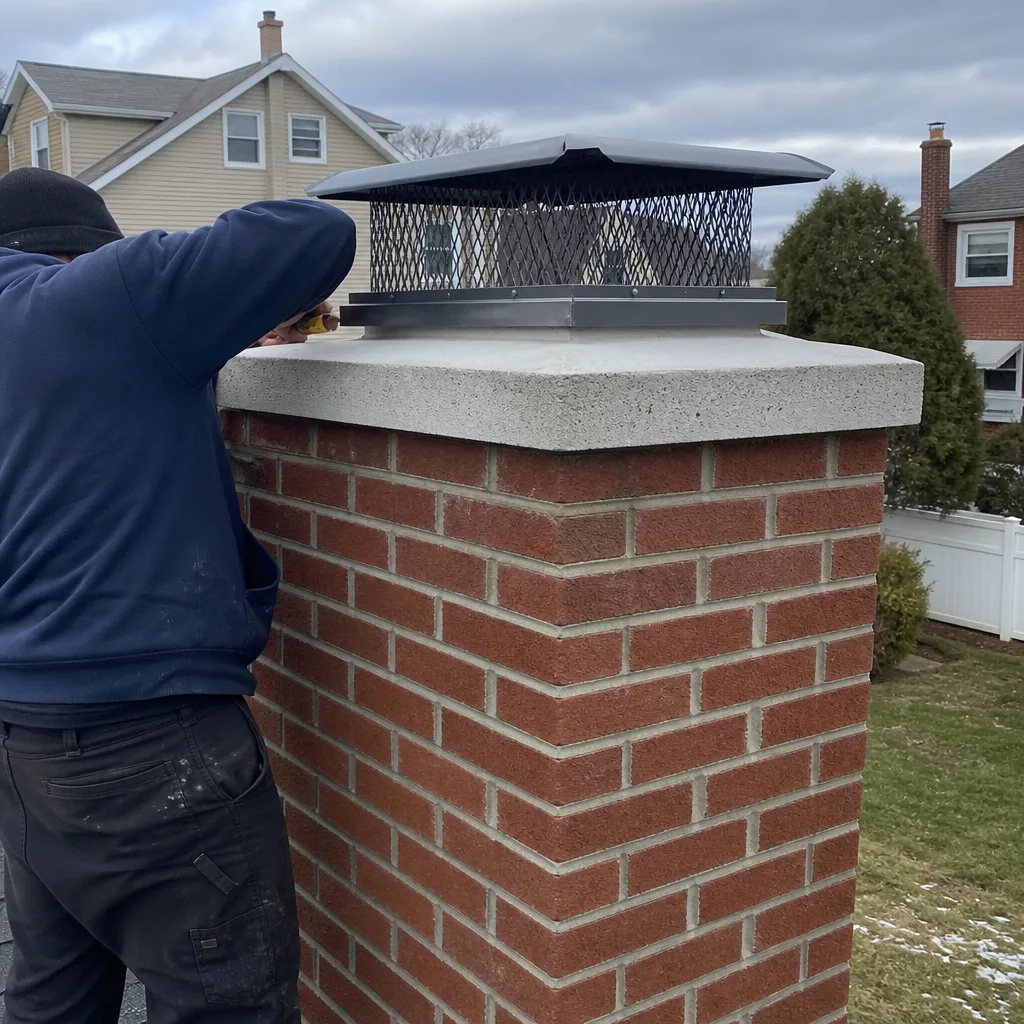 After
After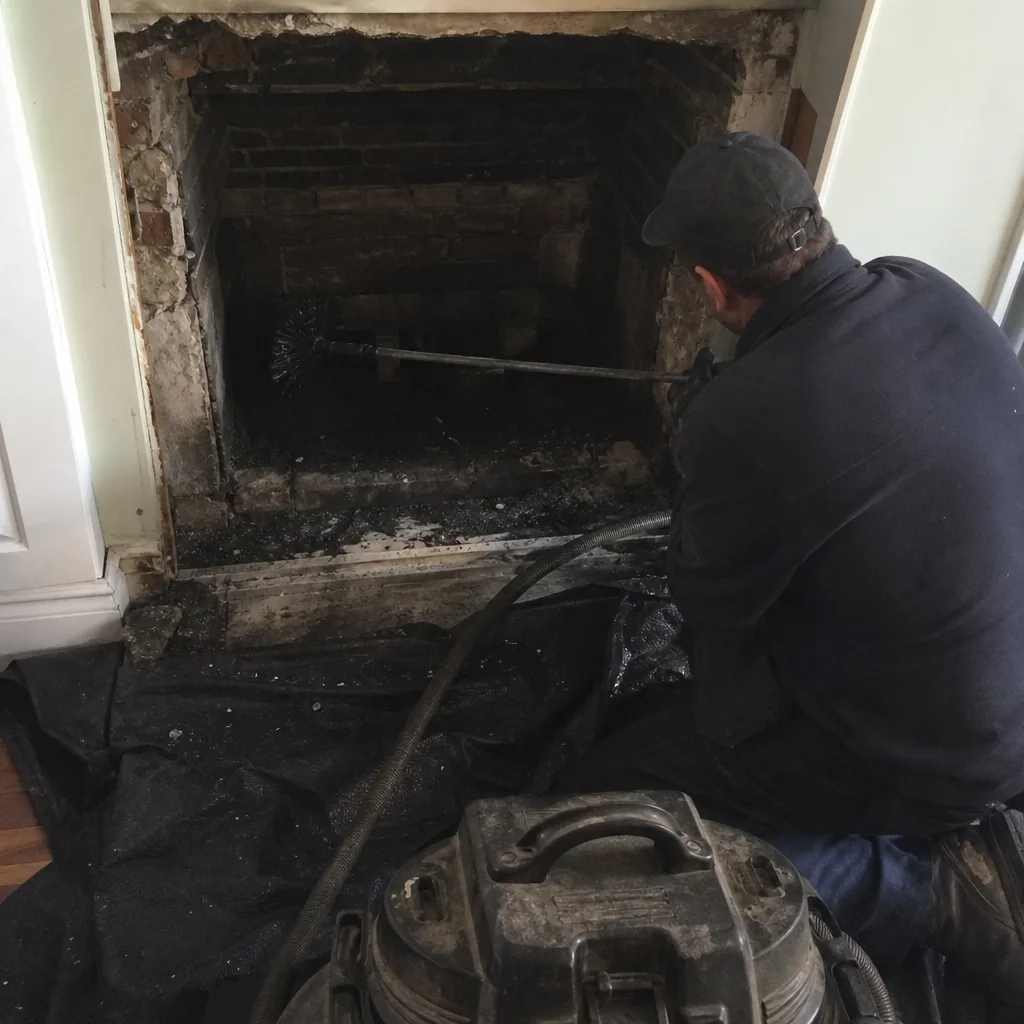 Before
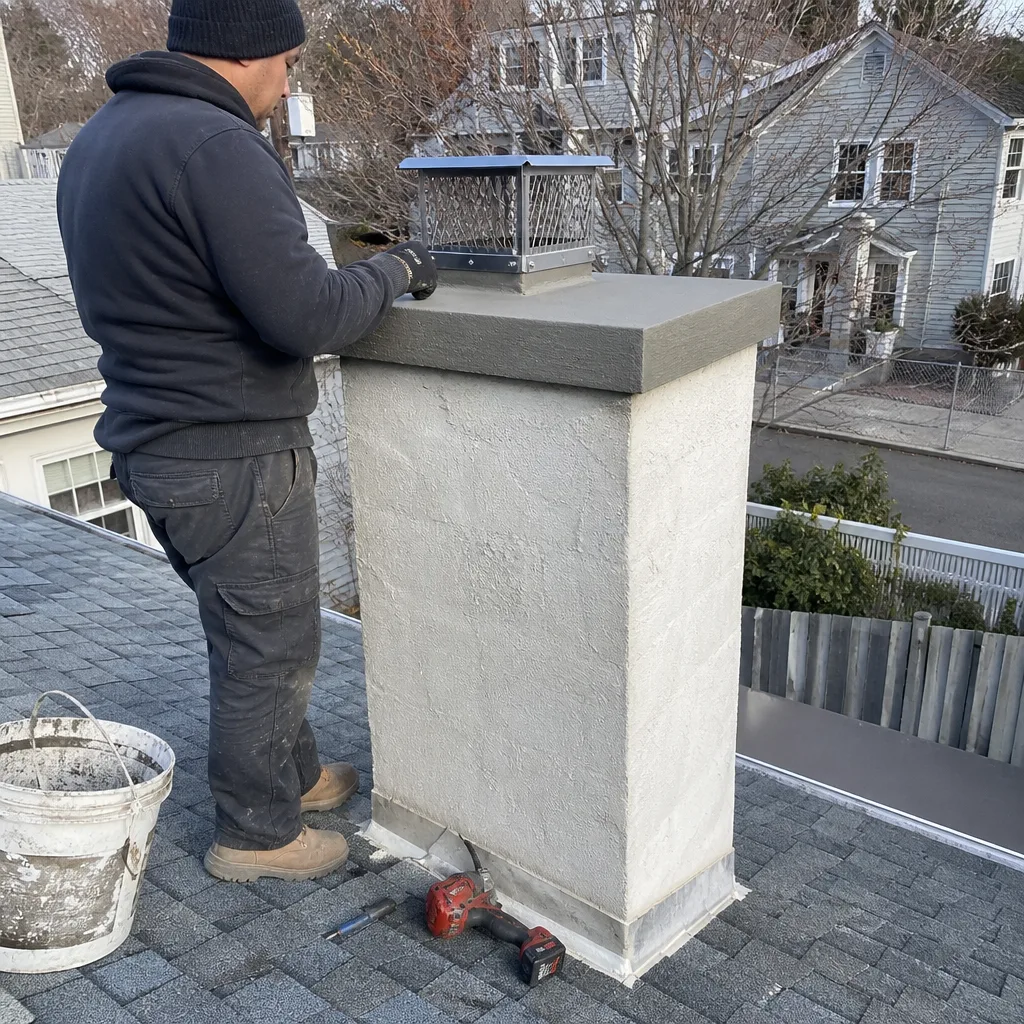 After
After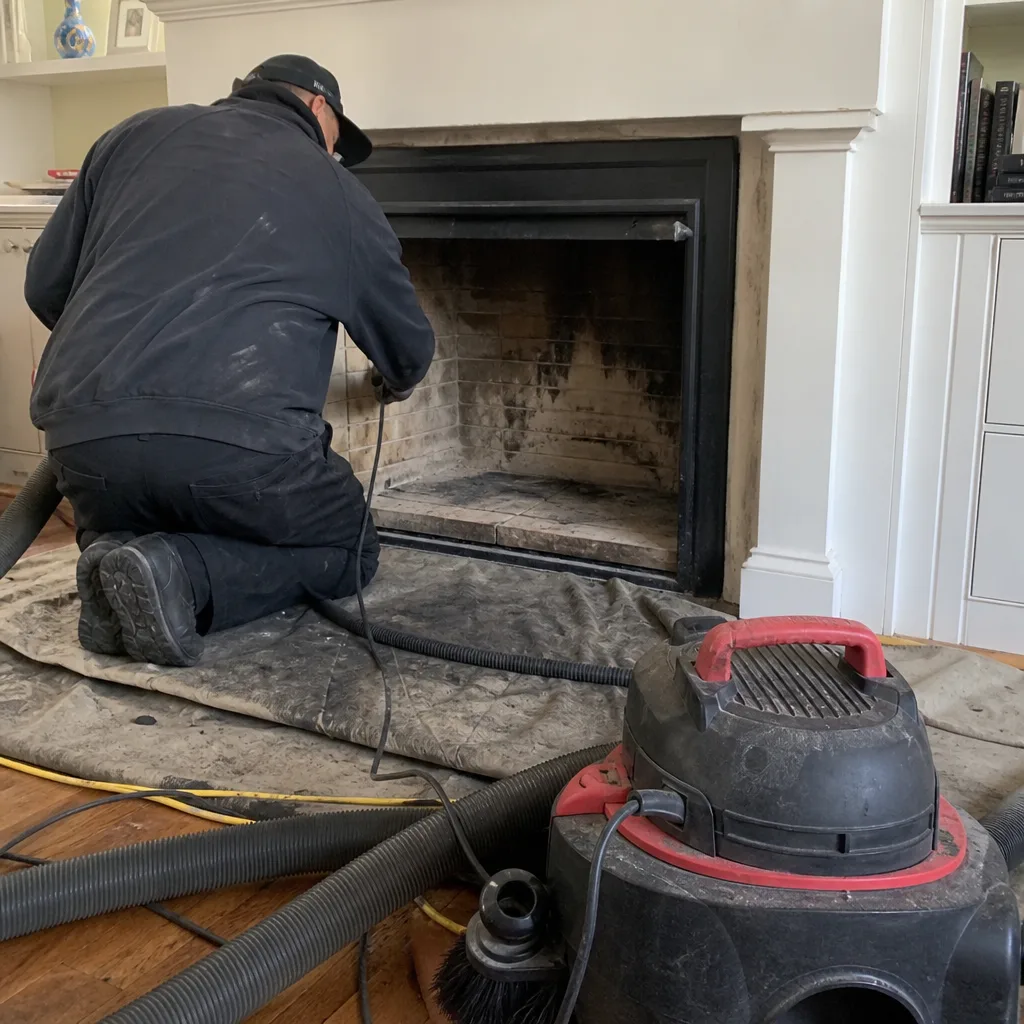 Before
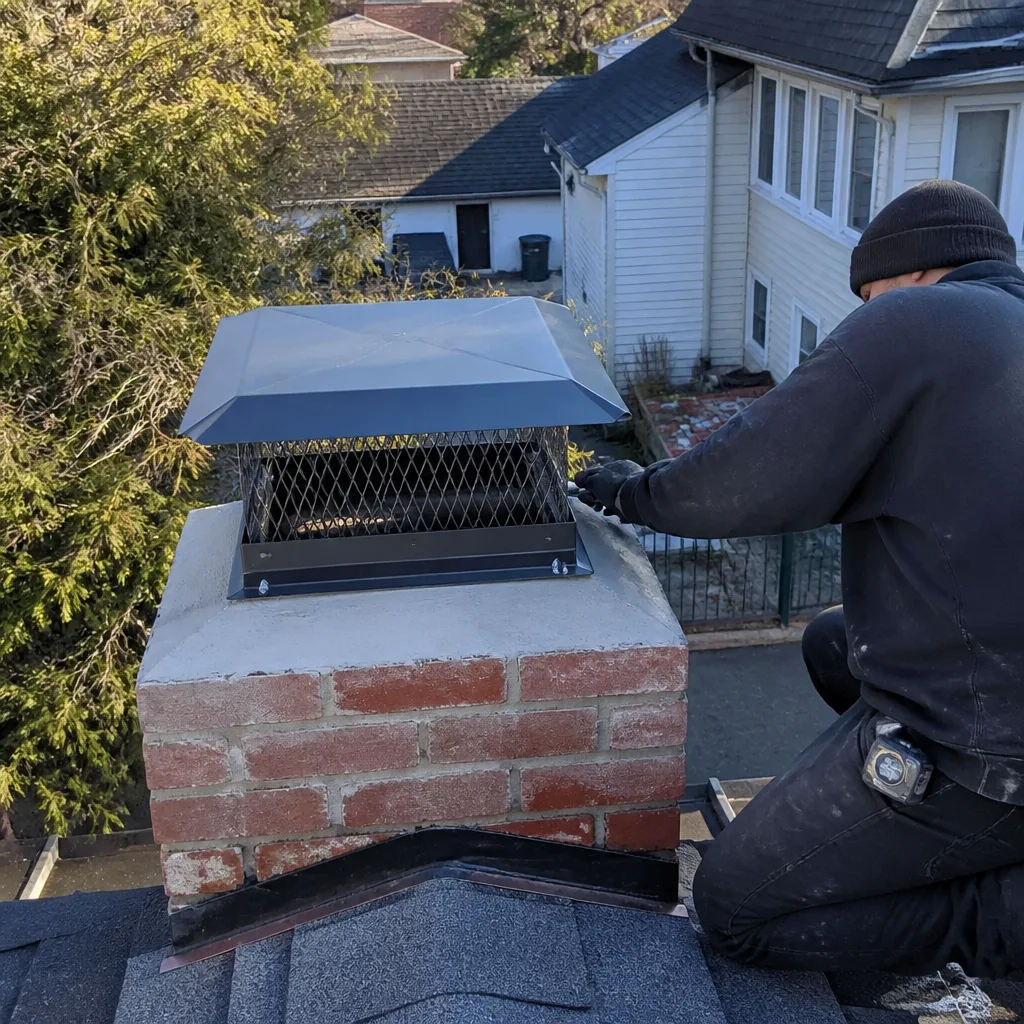 After
AfterChimney Cleaning Warning Signs: A Jersey City Homeowner’s Reference Guide
The white staining on the exterior brick above your firebox isn’t a waterproofing problem. It’s called efflorescence, and it means water is moving through your masonry and carrying dissolved salts outward, which means your flue is already wet on the inside. In Jersey City’s rowhouse and brownstone stock, this sign gets misread as cosmetic aging every day - until the liner fails or the damper rusts solid. This guide translates what your chimney is actually showing you into plain language, with specific attention to the warning signs that appear in our local housing stock and get dismissed as “just old brick.”
Quick Answer
Most chimney warning signs in Jersey City fall into three categories: exterior masonry changes (efflorescence, spalling, staining), interior performance issues (odor, draft problems, visible creosote), and mechanical deterioration (rusted dampers, damaged caps, liner gaps). If you notice white powder on exterior brick, smell wood smoke in summer, or see flaky black deposits thicker than a dime in your firebox, your chimney needs professional inspection before the next burning season.
Table of Contents
- Exterior Masonry: What Efflorescence, Spalling, and Staining Actually Mean
- Odor Diagnosis: What Different Smells Tell You About Your Flue
- Inside the Firebox: Creosote Stages and When Standard Sweeping Isn’t Enough
- Mechanical Wear: Rusted Dampers, Damaged Caps, and Crown Failure
- Rowhouse and Brownstone Specifics: Signs Other Guides Miss
- Seasonal Checklist: What to Look For, When to Look
- Common Mistakes to Avoid
- When to Call a Professional
- Frequently Asked Questions
- The Bottom Line
Exterior Masonry: What Efflorescence, Spalling, and Staining Actually Mean
Jersey City’s housing stock - particularly the brownstones of Paulus Hook, the rowhouses of The Heights, and the pre-war brick buildings downtown - presents a specific challenge. The masonry is old, often 80 to 120 years, and homeowners naturally assume exterior wear is just age. Three distinct surface changes tell very different stories about what’s happening inside your flue.
Efflorescence: The White Powder That Isn’t Cosmetic
That white, chalky film on your brick? It’s crystallized salt deposited by water moving through the masonry. Water enters through crown cracks, missing mortar joints, or failed flashing. As it migrates outward, it dissolves natural salts in the brick and mortar, then leaves them behind when it evaporates.
Here’s what matters: the water is passing through your chimney structure, not just sitting on the surface. In Jersey City’s freeze-thaw climate, that water expands when temperatures drop below 32°F, which happens reliably from December through February. Each cycle widens the pathway. We’ve inspected chimneys in Hamilton Park where efflorescence had been visible for three seasons before the homeowner called; the liner had corroded through in two places, and the damper plate was frozen with rust.
Efflorescence means active water intrusion. It will not stop on its own. The source is almost always above: a cracked crown, deteriorated cap, or failed flashing where the chimney meets the roofline.
Spalling: When Brick Faces Pop Off
Spalling is the flaking or peeling of the brick’s outer surface, sometimes exposing the softer interior. It happens when water trapped in the brick freezes and expands, breaking the face away. In Jersey City, we see accelerated spalling on chimneys with no cap or with caps that were installed without proper overhang.
Spalling indicates that water has been entering and remaining in the masonry long enough to complete multiple freeze-thaw cycles. The brick is losing structural integrity. We’ve replaced crowns in Bergen-Lafayette where spalling had progressed three courses down from the top; the chimney was structurally sound below, but the upper section needed rebuild work.
The critical distinction: efflorescence shows active water movement. Spalling shows that water has already caused structural damage. Both require intervention, but spalling often indicates a longer timeline of neglect.
Dark Staining and Green Growth
Dark vertical streaks on the chimney exterior, especially on the side that faces prevailing weather, indicate sustained wetting without adequate drying. Green or black growth - algae or moss - means the masonry stays damp continuously. In Jersey City’s humid summers, a chimney that doesn’t dry out between rain events becomes a host for biological growth that holds more moisture against the brick.
Dark staining below the crown line specifically suggests crown failure. The crown is the concrete or mortar cap that seals the top of your chimney. When it cracks, water enters at the most vulnerable point and runs down the interior faces of the flue tiles.
Key Takeaways:
- White powder (efflorescence) = active water intrusion, usually from above
- Flaking brick faces (spalling) = freeze-thaw damage, often years in development
- Dark streaks or green growth = sustained moisture, crown or cap failure likely
- All three indicate that water is compromising your flue’s interior, not just the exterior appearance
Odor Diagnosis: What Different Smells Tell You About Your Flue
Your nose is a more precise diagnostic tool than most homeowners realize. Three distinct odors point to three distinct problems, and knowing the difference can prevent both unnecessary anxiety and dangerous delay.
Wood-Smoke Smell in Summer
If you smell last winter’s fires when humidity rises in June or July, you have creosote deposits absorbing moisture and releasing volatile compounds. Creosote is hygroscopic - it pulls water from humid air. Jersey City’s summer humidity, regularly 70% or higher, activates dormant deposits.
This smell means your last sweep left significant buildup, or your burning habits (unseasoned wood, restricted air, smoldering loads) produced creosote faster than normal use could remove it. The smell itself isn’t dangerous, but the underlying buildup is. Stage 2 or Stage 3 creosote (see our The Complete Guide to Chimney Cleaning in Jersey City for full details) becomes more difficult to remove the longer it sits, and it lowers the ignition temperature of your flue.
Sulfur or Rotten-Egg Smell
This is the one to act on immediately. A sulfur odor from your fireplace indicates that combustion gases are entering your living space, either through a blocked flue, a damaged liner, or negative pressure pulling air down the chimney instead of up it.
In Jersey City’s tight rowhouse construction, bathroom exhaust fans, range hoods, and clothes dryers can create enough negative pressure to reverse normal draft, especially in homes with modern air sealing. But sulfur smell specifically suggests that fuel gases - including carbon monoxide - are present. Carbon monoxide has no odor, but other combustion byproducts do. The sulfur smell is your warning that the system is not venting properly.
Open windows, extinguish any flame, and call for inspection. Do not use the fireplace until the flue is verified intact and drafting correctly.
Musty or Earthy Smell
A damp, basement-like odor from the firebox indicates water intrusion and possible organic growth inside the flue. We’ve found this in Jersey City chimneys where the crown had cracked and summer rain had pooled behind the damper, creating conditions for mold growth on the smoke shelf.
Musty smell means water is entering and not draining or evaporating. The smoke shelf - the flat area behind the damper - is designed to catch falling debris, but it also catches water. Without proper drainage or drying, it becomes a reservoir.
Odor Reference:
| Odor | What It Indicates | Urgency |
|---|---|---|
| Wood smoke in summer | Active creosote, incomplete prior sweep | Schedule before next season |
| Sulfur / rotten egg | Combustion gas entry, draft reversal | Immediate - do not use |
| Musty / earthy | Water intrusion, possible organic growth | Within 1-2 weeks |
Inside the Firebox: Creosote Stages and When Standard Sweeping Isn’t Enough
The inside of your firebox reveals what your flue contains. Most homeowners don’t know what to look for, or they mistake dangerous buildup for normal soot. Here’s how to read what you see.
Stage 1: Soot
Soft, black, powdery. Brushes off easily. This is normal residue from wood burning and removes with standard sweeping. If this is all you see, your chimney is in routine maintenance territory.
Stage 2: Granular Creosote
Crunchy, irregular flakes, often shiny. Looks like black cornflakes stuck to the flue walls. This forms when combustion gases condense in a cooler-than-optimal flue - common with unseasoned wood, oversized fireboxes, or exterior chimneys on north-facing walls that stay cold. In Jersey City’s older housing, we see this frequently in chimneys that were built for coal and converted to wood without proper sizing.
Stage 2 requires more aggressive removal - rotary chains or whips, not just brushes. Standard sweeping may leave significant residue. We’ve inspected fireboxes in The Heights where the homeowner had “just had it swept” but the flue still contained a quarter-inch of Stage 2 buildup that standard brushes couldn’t dislodge.
Stage 3: Glazed Creosote
Hard, shiny, black or dark brown coating. Looks like varnish or tar. This is the dangerous stage. It forms when Stage 2 buildup is subjected to repeated heating cycles without removal, melting and resolidifying into a dense, fuel-rich layer.
Stage 3 creosote ignites at approximately 451°F - lower than paper. A normal fire can reach 1,000°F or more. The buildup itself becomes fuel for a chimney fire, which can exceed 2,000°F and crack flue tiles, damage liners, or ignite adjacent framing through heat transfer.
Removal requires chemical treatment to soften the deposit before mechanical removal. This is not standard sweeping. If you see glazed, shiny buildup in your firebox or at the damper, your chimney needs specialized service.
What to Look For in Your Firebox
- Thickness test: If you can scrape buildup thicker than a dime from the firebox walls with a fingernail, your flue has significant deposits.
- Texture test: Powdery is normal. Crunchy or flaky means Stage 2. Shiny and hard means Stage 3.
- Location check: Buildup concentrated at the top of the firebox opening suggests restricted draft. Buildup at the back, above the fire, suggests oversized firebox or cold flue.
- Damper condition: Rust, warping, or binding when you operate the handle indicates moisture damage and possible crown or cap failure above.
We’ve documented cases in Jersey City where a homeowner saw “just some black stuff” that turned out to be three-quarters of an inch of Stage 3 creosote. The camera inspection showed the flue tile had cracked from a prior, undetected chimney fire. No one had told them what to look for.
Mechanical Wear: Rusted Dampers, Damaged Caps, and Crown Failure
The metal components of your chimney system tell a chronological story. Rust is not random; it follows specific pathways from specific failures.
The Rusted Damper: Reading the Evidence
Your damper plate sits directly below the flue opening, exposed to whatever enters from above. When we find a rusted damper in a Jersey City chimney, we know with near certainty that the cap or crown has failed.
Here’s why: rain enters through a missing or damaged cap, or through cracks in the crown. It runs down the flue walls, collects on the smoke shelf, and contacts the damper plate. Stainless steel dampers resist this longer; original cast iron or steel dampers in pre-war housing rust more readily. But any rust means water has been entering long enough to initiate oxidation.
A rusted damper that won’t open fully restricts draft and pushes smoke into your living space. A damper that won’t close fully wastes heated air year-round. In Jersey City’s climate, a stuck-open damper can cost significant heating dollars over a winter.
The repair path is upward, not just at the damper. Replacing the damper without fixing the cap or crown guarantees recurrence. We’ve replaced dampers in Downtown Jersey City where the previous company had done exactly that - new damper, same leaky crown, rust again in 18 months.
Cap Condition: The First Line of Defense
A proper chimney cap has three functions: exclude rain, exclude animals, and block wind-induced downdrafts. In Jersey City, we see all three failures regularly.
Missing caps are obvious. Less obvious are caps with corroded mesh sides (animal entry), caps with insufficient overhang (rain blows in), and caps installed without proper clearance for flue gas exit (causes condensation and creosote acceleration). We install caps from Famco and Olympia Chimney with proper spark arrestor mesh and adequate overhang for our wind exposure.
Crown Cracks: The Hidden Entry Point
The crown is not the cap. The crown is the concrete or mortar surface that covers the top course of brick, sealing the space between the flue tile and the chimney exterior. It should have a slight slope to shed water and an overhang that drips clear of the brick face.
Crown cracks allow water directly into the chimney structure, not just the flue. We’ve found crowns in Jersey City that were poured without expansion joints, cracked within two winters, and allowed water to saturate the masonry for years before any interior sign appeared. By then, the flue liner had shifted, mortar joints had washed out, and the repair scope had tripled.
Small crown cracks can be sealed with professional-grade crown sealant. Larger cracks or deteriorated crowns require rebuild. The key is catching them before water reaches the flue liner.
Rowhouse and Brownstone Specifics: Signs Other Guides Miss
For more guides & resources tailored to local conditions, start here. Generic chimney advice assumes a detached house with a straight flue and no neighbors. Jersey City’s dominant housing types create conditions that standard warning sign lists don’t address.
Shared-Wall Smoke Migration
In rowhouse construction, party walls between units often contain gaps, old flue passages, or construction voids that allow smoke to migrate horizontally. If you smell smoke when your neighbor is burning, or if smoke enters your basement when you have a fire, the problem may not be your flue alone.
We’ve traced smoke migration in Jersey City rowhouses to disconnected flue liners in the party wall, abandoned chimney breasts that were never properly sealed, and gaps where electrical or plumbing penetrations broke the fire separation. A Level-2 camera inspection with smoke testing is the only way to map the actual pathway.
Offset Flues
Many Jersey City brownstones were built with flues that offset horizontally to avoid floor beams or to align with fireplaces on different levels. These offsets create ledges where creosote accumulates heavily and where standard straight brushes cannot reach.
If your chimney has an offset - common in three-story brownstones with basement and parlor floor fireplaces - standard sweeping may leave significant deposits. We’ve found offsets in Paulus Hook and Van Vorst Park where the previous sweeps had never mentioned the configuration, and the offset contained years of packed creosote.
Insert Installations Without Liner Work
Wood-burning inserts - the metal fireboxes that fit into existing fireplace openings - were popular in Jersey City during the 1970s and 1980s. Many were installed without proper chimney liners, or with liners that have since deteriorated.
An insert connected to a flue too large for its exhaust creates chronic creosote buildup (cold, slow-moving gases condense) and draft problems. The warning sign is often a smoke-stained insert face, persistent smoke smell, or difficulty starting and maintaining a fire. The underlying issue is usually an unlined or improperly lined flue that needs chimney repair in Jersey City with proper stainless steel liner sizing.
We’ve removed inserts in The Heights where the original installation had used a flex liner that had collapsed or corroded through, venting exhaust directly into the masonry cavity. The homeowner knew only that “it never drafted right.”
Tall, Narrow Flues in Pre-War Construction
Jersey City’s older chimneys were often built with multiple narrow flues - 8×8 or 8×12 - designed for coal or oil appliances. Modern gas inserts or properly sized wood stoves need liners that reduce and round the flue for proper draft. Without this modification, the flue runs too cold, condenses moisture and creosote, and deteriorates faster.
The warning sign is chronic moisture: damp firebox, rusted damper, efflorescence on the exterior of that chimney section. The solution is proper liner sizing with materials like DuraFlex stainless steel, not just repeated sweeping of a fundamentally mismatched system.
Seasonal Checklist: What to Look For, When to Look
Chimney warning signs appear on different schedules. A systematic check catches problems in their early, less expensive stage.
Early Fall (September-October): Pre-Season Inspection
- Exterior walk-around: Check for new efflorescence, spalling, or staining since last year. Compare to photos if you have them.
- Cap and crown: Binocular check from the ground, or visual from the roof if you have safe access. Look for missing cap, visible crown cracks, or shifted flue tiles.
- Firebox and damper: Open damper fully. Check for rust, binding, or visible creosote buildup. Operate the handle several times - stiffness indicates corrosion or debris.
- Smell test: Close windows, leave the house for an hour, return through the front door. Any smoke, sulfur, or musty odor?
- Smoke chamber: Shine a flashlight up past the damper. Look for shiny or flaky deposits, or any light visible through cracks.
Mid-Winter (January): Operating Check
- Draft behavior: Does smoke linger in the firebox before rising? Does it puff back into the room on startup? Both indicate draft problems - possibly blockage, cold flue, or negative pressure from exhaust fans.
- Performance change: A fireplace that “used to work fine” but now smokes or burns poorly has a changed condition, not normal aging. Something has shifted, blocked, or deteriorated.
- Exterior check after storms: Ice, wind, and freeze-thaw in Jersey City’s winter can damage caps and crowns. Check for new debris around the chimney base, which may indicate cap displacement.
Late Spring (May): Post-Season Assessment
- Final burn inspection: After your last fire, check the firebox for buildup accumulation. This tells you how much creosote one season produced.
- Odor monitoring: As humidity rises, note any smoke smell. This confirms creosote presence and indicates whether your last sweep was thorough.
- Schedule maintenance: If you saw warning signs during the season, schedule inspection and sweeping now. Summer appointments have better availability, and you’ll be ready when cold returns.
Common Mistakes to Avoid
- Mistaking efflorescence for “just old brick.” The white powder is active water movement through your masonry. It will not stop, and it damages your flue from the outside in. We’ve seen homeowners in Jersey City repaint or water-seal the exterior, trapping moisture inside and accelerating deterioration.
- Assuming a recent sweep means a clean flue. Not all sweeps are equal. Standard brushes don’t remove Stage 2 or 3 creosote, and they don’t reach offset flues. If you still smell smoke in summer or see buildup at the damper, your flue may not be as clean as you were told.
- Ignoring summer odors because “we’re not using it.” Summer humidity activates creosote odors, but it also accelerates liner corrosion and masonry deterioration. The odor is a signal to inspect, not just an annoyance to tolerate until fall.
- Replacing the damper without finding the water source. A rusted damper is a symptom. The cause is above it. We’ve repaired chimneys in Bergen-Lafayette where two dampers had been replaced in five years because no one addressed the cracked crown that was letting water in.
- Installing a cap without checking crown condition. A new cap on a cracked crown still lets water into the masonry. The cap protects the flue opening; the crown protects the chimney structure. Both need to be sound.
- Assuming rowhouse smoke migration is “just how old houses are.” Smoke moving between units is a code violation and a health hazard. It indicates a breach in fire separation that needs identification and repair, not acceptance.
- Waiting for “a problem” before scheduling inspection. By the time you see smoke backdraft or smell sulfur, the condition has progressed past early intervention. Annual inspection for active fireplaces, every two to three years for occasional use, catches problems when they’re still minor.
When to Call a Professional
Call for inspection if you see any exterior masonry change, smell any odor from your fireplace, notice draft performance change, or cannot operate your damper smoothly. Call immediately if you smell sulfur or rotten egg odor, or if smoke enters your living space during normal use.
In Jersey City’s specific housing stock, also call if you’ve never had a camera inspection and your home is more than 50 years old, if you have a fireplace insert installed before 1990, if you share a party wall and smell neighbor smoke, or if your chimney has ever had a chimney fire - even one you extinguished yourself.
Hearthstone Chimney Co. offers free estimates in Jersey City. We’ll document what we find with photos you can see, explain it in plain English, and give you a written verdict with no pressure. Call (732) 507-9649. A live person answers, 24 hours a day.
Frequently Asked Questions
A standard chimney sweep in Jersey City typically runs $200-$350 for a routine cleaning with basic inspection. If Level-2 camera inspection is needed, or if creosote has advanced past Stage 1, costs increase based on time and equipment required. We provide no-hassle upfront pricing - the number on the estimate is the number on the invoice. Call (732) 507-9649 for an exact quote; estimates are free.
The National Fire Protection Association recommends annual inspection for all chimneys, and sweeping when creosote buildup reaches one-eighth inch. For Jersey City homeowners who burn regularly - three or more times weekly during heating season - annual sweeping is prudent. Occasional users can often extend to every two to three years if inspection shows minimal buildup. Our climate, with humid summers that activate creosote and freeze-thaw winters that stress masonry, makes regular inspection particularly valuable.
You need a new liner when the existing one is damaged, improperly sized, or absent - not before. We never recommend liner replacement without camera evidence you can see for yourself: cracks, gaps, missing sections, or dangerous configuration. In some cases, a damaged liner can be repaired with HeatShield cerfractory sealant rather than full replacement. In others, the liner is sound and sweeping is sufficient. The inspection determines the need; we don’t sell liners to chimneys that don’t require them. Call (732) 507-9649 for a free inspection with photos.
Skipped maintenance leads to creosote accumulation, which increases chimney fire risk and can crack flue tiles or damage liners. Water intrusion from uncorrected crown or cap damage corrodes metal components, deteriorates mortar, and can cause structural damage requiring rebuild rather than repair. In Jersey City’s rowhouse stock, neglected chimneys can also create smoke migration hazards between units. The cost of delayed maintenance is almost always higher than scheduled upkeep - sometimes by a factor of ten.
Summer humidity activates creosote deposits, releasing volatile compounds that winter’s dry air does not. The smell means creosote is present; its absence in winter doesn’t mean the creosote left, just that conditions weren’t right to release odors. In Jersey City’s humid climate, this is common. A thorough sweep removes the source, not just the symptom.
Homeowners can and should do visual checks of exterior masonry, damper operation, and firebox condition. But a complete assessment requires camera inspection of the flue interior, which is not accessible without specialized equipment. We’ve found critical damage in flues that looked fine from below - cracks at shoulder offsets, liner gaps behind smoke shelves, animal nests in upper flue sections. Professional inspection with photo documentation is the only way to verify internal condition. Hearthstone’s Level-2 inspections end with photos you can see and a plain-English verdict.
The Bottom Line
Your chimney shows warning signs early if you know what to look for. Exterior masonry changes - efflorescence, spalling, staining - indicate water intrusion that compromises your flue from the outside. Interior odors and visible creosote buildup signal combustion and ventilation problems that affect safety and performance. Mechanical wear at the damper, cap, and crown reveals the chronological story of water entry and its consequences. In Jersey City’s rowhouse and brownstone stock, shared-wall configurations and offset flues create additional warning signs that generic advice misses.
The common thread: these signs are visible and interpretable before failure occurs. The homeowner who knows what white powder on brick actually means, or what summer smoke smell indicates, can intervene when the fix is still straightforward. The homeowner who waits for obvious failure - smoke in the room, a chimney fire, a collapsed liner - faces more extensive repair and more hazard.
Annual inspection with photo documentation, honest assessment of what can wait and what cannot, and repair backed by a written guarantee: this is the standard we apply in every Jersey City home we serve. Done right, and we stand behind it.
Written by Russell Haines, Owner at Hearthstone Chimney Co., serving Jersey City since 2014.